
Fixed assets, such as buildings, infrastructure and equipment, are often a hospital’s largest ones. The inventory, condition and reliability of these assets, however, remains elusive for many hospital executives. Capital investment planning is based on limited info, leading to an often inefficient allocation of scarce capital resources. Will these assets live up to their expected performance?

Niall Reynolds For Construction Executive: 'Improve Capital Project Outcomes With Emerging Technology'
Capital projects are time-consuming, labour-intensive and expensive. New technologies can do a lot to simplify or eliminate many tasks—from redundant paperwork to manual processes in all stages (including initiation, planning, executing, monitoring and control, closing and operating). The most valuable emerging technologies are those that help address the basic need to balance the project triangle of scope, schedule and cost.
'Optimizing the Construction Team With AI': Michael Matosin for Construction Executive
Our Machine Learning and Data Scientist, Michael Matosin, reveals the actual applications for Artificial Intelligence in Construction. There's a general idea of AI as an experimental field, something we will use in the future. Of course, there's a lot to develop, but in the present days, we can use this technology, such as drones automating inspection processes and generating reports.
What Keeps the Finance Team Awake at Night
Chief Financial Officer
Capital projects are complex, costly and hard to execute. No surprise 90% of large capital projects end up over budget and/or (usually and) behind schedule. No surprise they keep the finance team awake at night.
'Smart Modeling For Today's Demanding Design Environment': Enstoa for Engineering.com
Engineering.com released a recent survey measuring the acceptance of technology by people working in construction and building trades. The study, which surveyed people at managerial and leadership levels, asked participants about their use of legacy and new technologies within the AEC industry.
The Enstoa team contributed to the research by reinforcing how today's emerging technologies, such as BIM, increase efficiency across different levels of an organization.
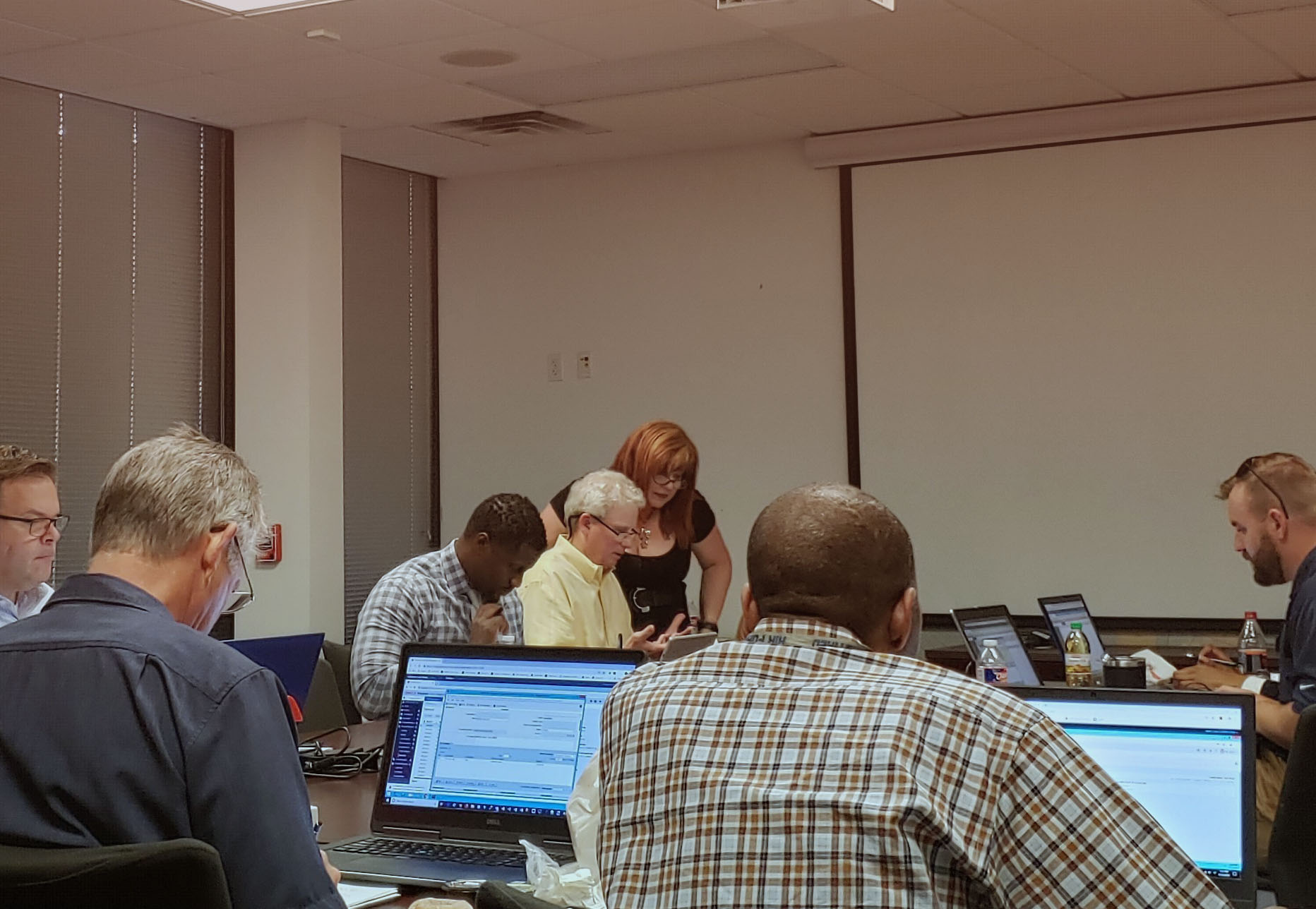
Unifier Administration training in Dallas Texas
Enstoa is holding two unique Unifier training courses in our Dallas, Texas office the week of Oct. 28, 2019, from 8.30AM - 5.00PM.
Whether you are the Unifier administrator for your organization, responsible for supporting your end-users, managing security permissions and maintaining the system — or you are maintaining and enhancing your company's Unifier utilization by modifying BPs and changing configuration — we've got a Unifier course for you!
What If We Could Do What We Do Best?
Director of Digital Solutions
What-ifs - I love doing "What-ifs" and "Time Impact Analyses", even risk workshops; they break the drudgery of the dreaded monthly report.
Recently I have let myself mull over a few compelling "What-ifs."
What if… we didn't have to waste, I mean spend, hours maintaining our own "database" of project costs and then reconcile them against Finance's "system of record?"
'The Benefits of a Mathematical Approach in Capital Project Portfolio Planning': Kay Bosompem for Construction Executive
A mathematical approach to portfolio planning can optimize decision making in the built environment by accounting for factors that other methods just can’t consider. Enstoa's Vice President of Engineering, Kay Bosompem, explains how using objective tools can help capital projects management teams avoid missed opportunities.
Michael Matthews for Construction Executive: 'Increasing Efficiencies with a Holistic Data Environment
Forty percent of construction project costs come from inefficiencies of the current document-driven structure that is holding the entire industry back. The implementation of a Holistic Data Environment would end the data-flow issues between the different stakeholders and daily chase-down of information, and projects would achieve significant productivity gains.
Three Ways to Build Public Trust on Megaprojects
In the built environment, the sheer size of megaprojects often means treating them as a cluster or series of smaller projects. Sometimes one part of the megaproject is planned as a part of the public infrastructure while another is not.
For instance, Wisconsin-based Landmark Development is currently planning a $20 billion Chicago-based megaproject that will include a major transit hub near Soldier Field—the football stadium that’s home to the Chicago Bears.